

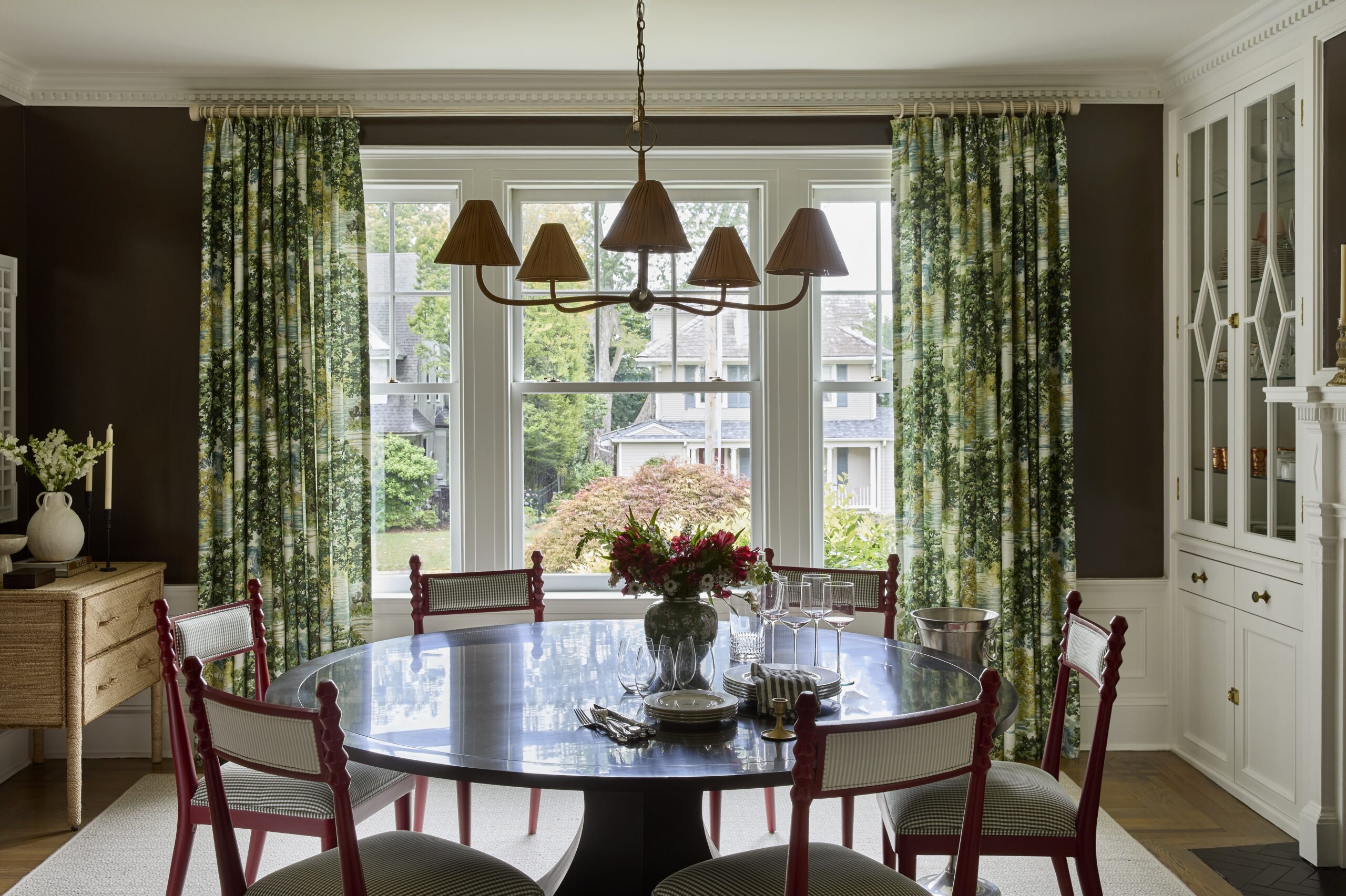


Inside Heritage House, an early-1900s Colonial in Chatham, New Jersey, where knowing what to keep was half the design.
When you walk into an old house, it’s very easy to start making a list.
The millwork is imperfect. The staircase is a bit slanted. The floorboards creak. The addition doesn’t quite relate to the original home. There are two strange benches tucked beside the fireplace that are at once odd, but incredibly charming and intriguing.
Fix. Fix. Fix.
But what if some of the things that aren’t quite right are also the things making the house interesting?
That became a bit of a mantra while we were designing Heritage House , an early-1900s center hall Colonial in Chatham, New Jersey. The house had been added onto and altered by previous owners over the years, and our client had no interest in making it feel brand new. Actually, it was the opposite.
She had stayed at a number of charming New England inns and bed-and-breakfasts and loved that particular lived-in feeling – the color, the pattern, the slightly country quality and, most importantly, the sense that everything hadn’t arrived on the same truck.
That was our jumping-off point.
It was our job to determine what was worth keeping and what needed a fresh start.
An Original Dutch Door Worth Keeping
The foyer gave us a very good example.
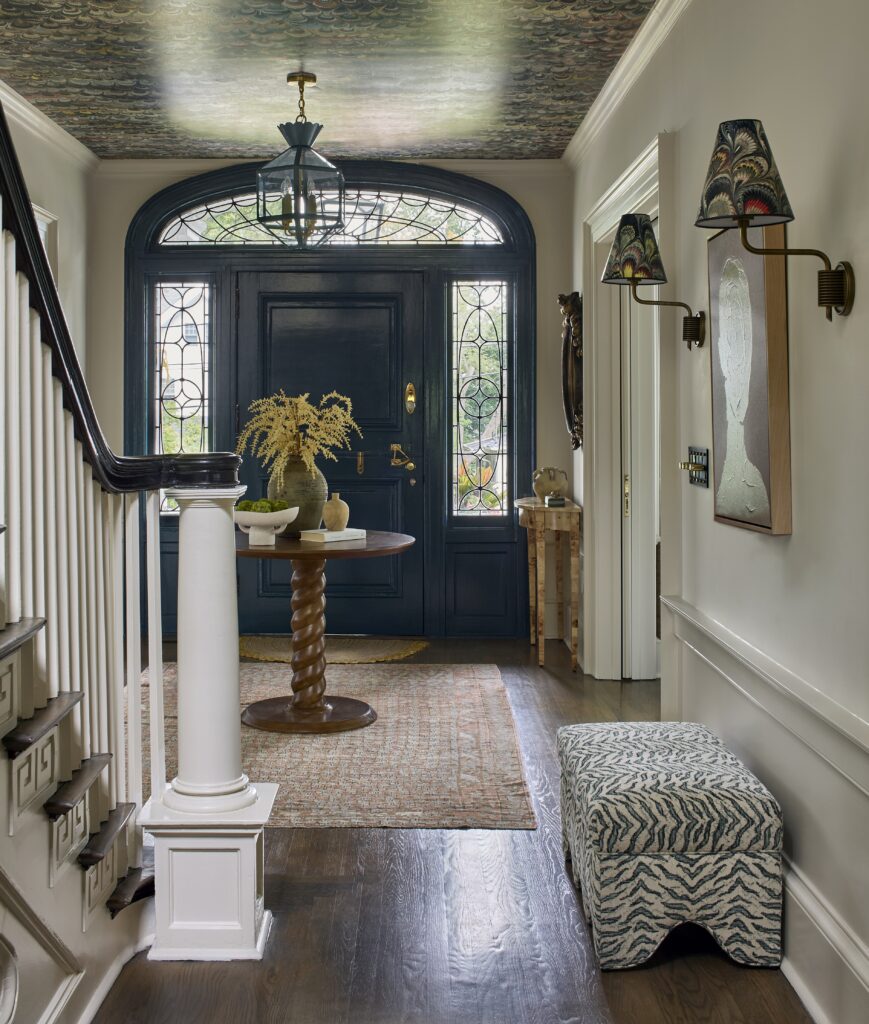
The house has an incredible old Dutch door surrounded by leaded glass, complete with its original hardware. They just don’t make doors like this anymore – or, at least, not without spending a small fortune.
So there was never a question of replacing it. Instead, the homeowners tracked down what they told us was the one metal worker in the entire state of New Jersey who could repair the hardware. We had our painter apply a deep, moody teal in high gloss, and that front door now shines like it was always meant to.
The ceiling wallpaper actually came from our client. She had found it in a hotel she stayed in and fallen in love with it, and we tracked it down and figured out how to use it. We added sweet little sconces to the walls and then covered their shades in the same wallpaper as the ceiling.
Making the Old Millwork Make Sense Again
Then there’s the formal living room.
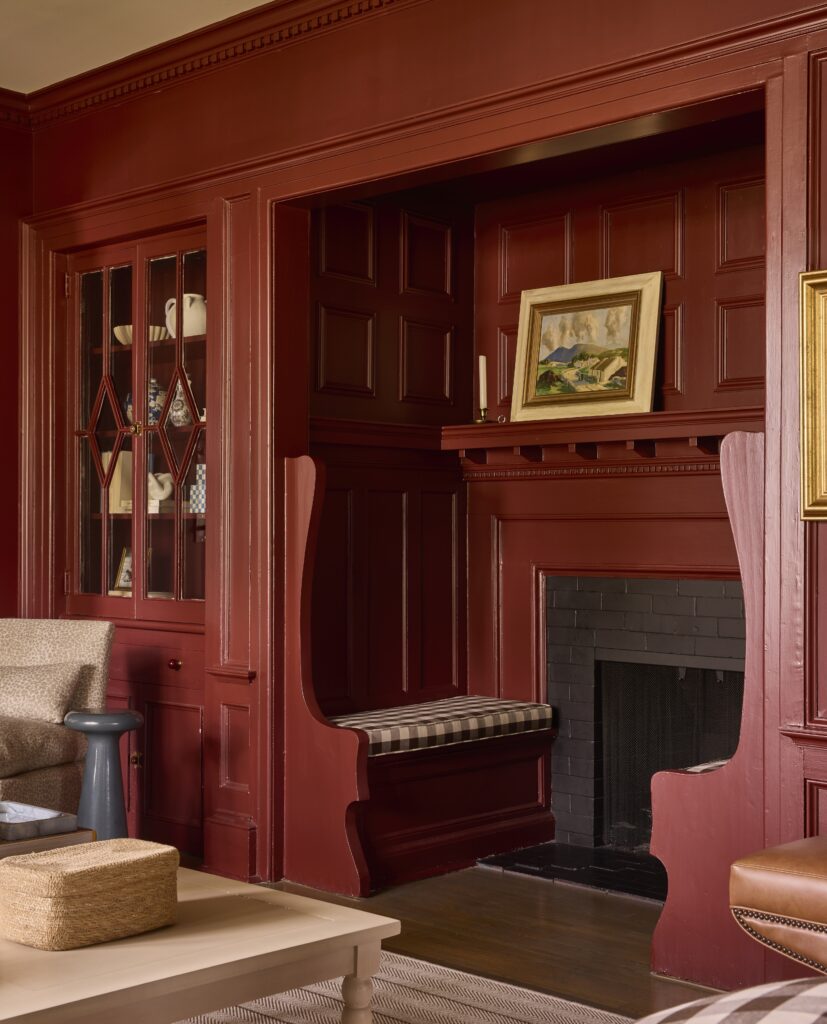
This room has a fireplace with two built-in benches tucked right up against it. When we first saw them, we thought they looked a little like church pews. They don’t look super comfortable, and they probably aren’t something a designer or architect would ever design from scratch today.
But we also knew immediately that we weren’t getting rid of them.
As it turns out, there’s likely some history behind them. The house has strong Shingle Style influences, and built-in seating around the hearth (often referred to as an inglenook or chimney corner) was a feature found in Shingle Style and Arts & Crafts homes around the turn of the 20th century. The idea was quite literal: create a cozy little place to sit close to the fire.
Suddenly, our weird church pews made a lot more sense.
The problem wasn’t really the benches anyway. It was everything happening around them.
Over the years, the fireplace wall had ended up with a combination of old millwork, sheetrock, molding and wallpaper that didn’t quite make sense together. Parts of it felt original. Other parts felt like someone had tried to “fix” the original. And that’s where things had gone wrong.
Instead of starting over, we added molding where it was needed so that the entire nook (and, really, the entire fireplace wal) finally read as one architectural composition. The benches stayed exactly where they were, but suddenly they looked intentional again.
We wrote more about the things we didn’t change at Heritage House over on our Substack. Sometimes the things you leave alone deserve as much explanation as the things you change.
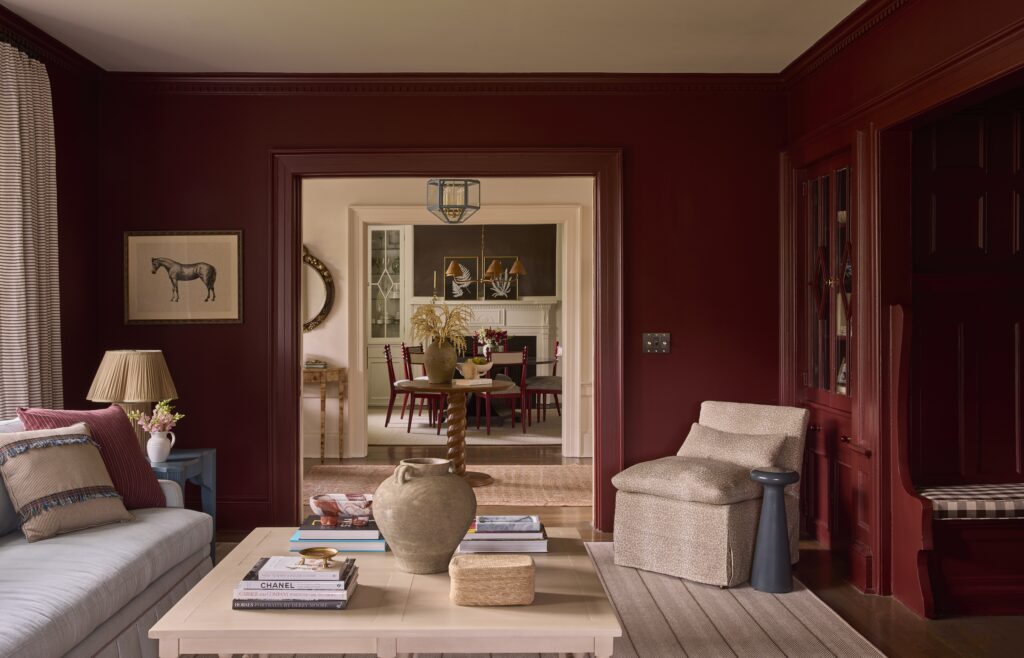
We did the same thing with the rest of the old millwork in the room. It’s not perfect. A fresh coat of white paint wasn’t going to magically make it perfect (but we didn’t really want perfect, anyway). We weren’t interested in stripping away every sign of age just to make the millwork look new.
So we went the other direction.
We color-drenched the entire room in a deep cottage red, walls and millwork included. The saturated color softened all those little imperfections and gave the room the rich, enveloping feeling we wanted from the beginning.
And if you’re here for the actual paint colors, we’re sharing the Heritage House palette (and why we chose each shade) over on Substack.
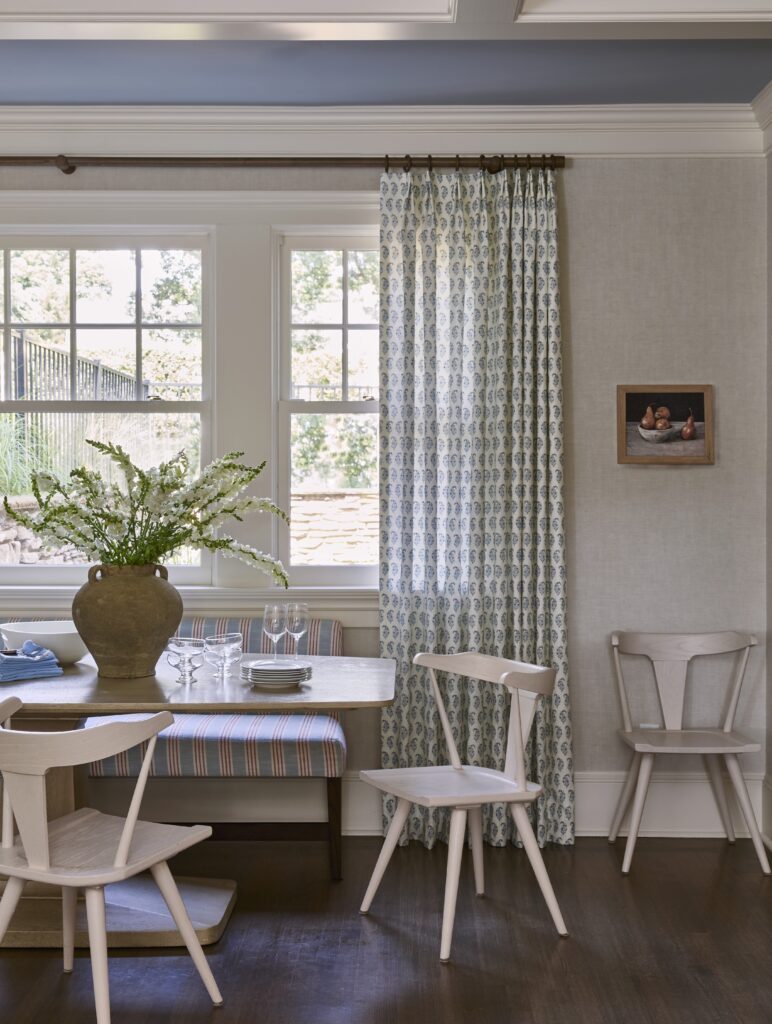
Don’t “Update” an Old House Out of Being an Old House
This is probably the trickiest part of working with an older home.
Of course you want it to feel current. Nobody wants to live in a time capsule. But there can be a tendency to “freshen” everything until you’ve accidentally removed all the depth that made you fall in love with the house in the first place.
Old Doesn’t Have to Mean Precious: A Family Room Designed for Real Life
Heritage House is also home to three young kids.
So while we wanted to respect the age of the house, nobody was interested in creating a museum.
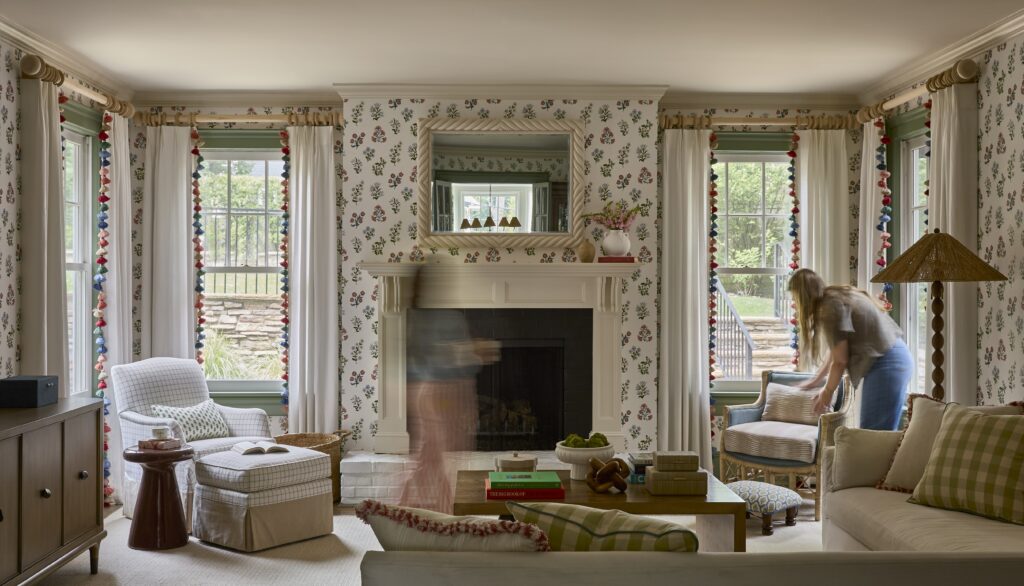
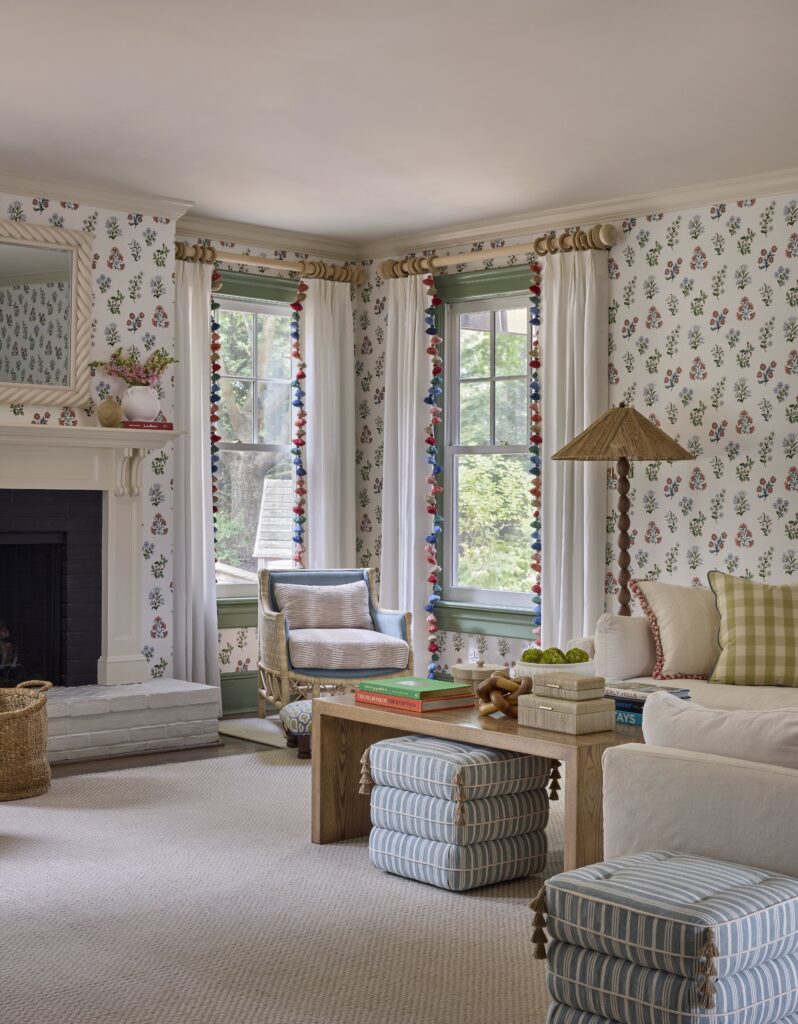
The family room is probably the best example. Our clients wanted to keep their existing white sectional. It was in good condition and it fit. But it was not exactly the most exciting starting point.
So we let everything around it do the talking.
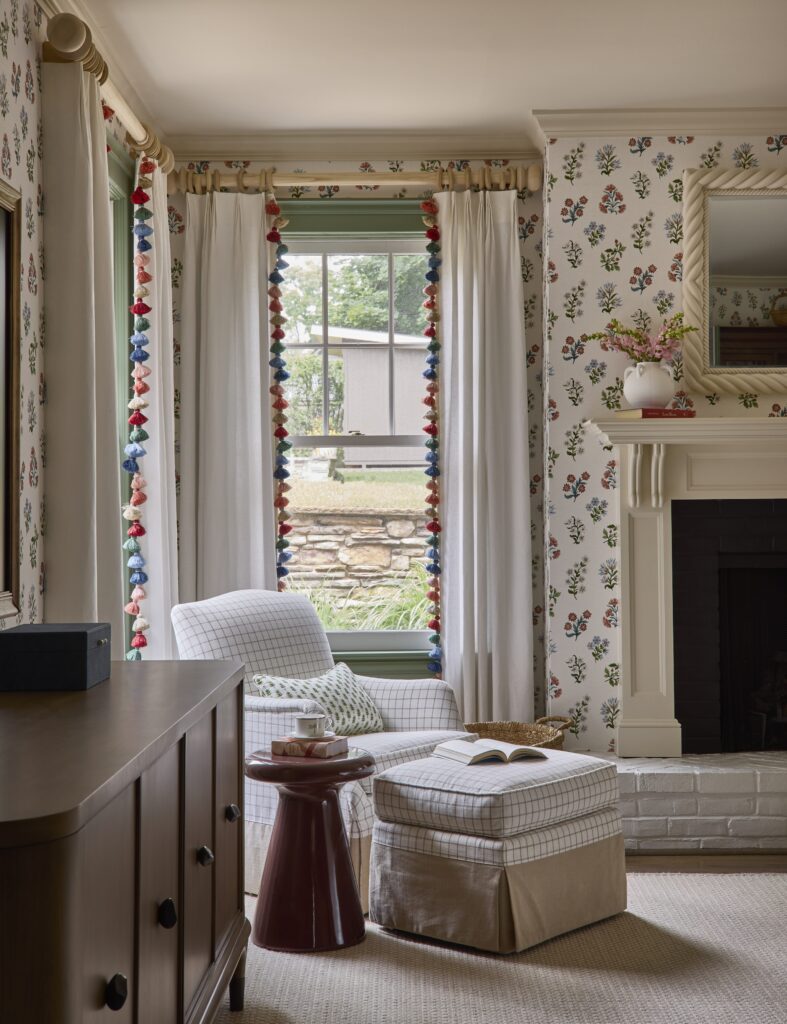
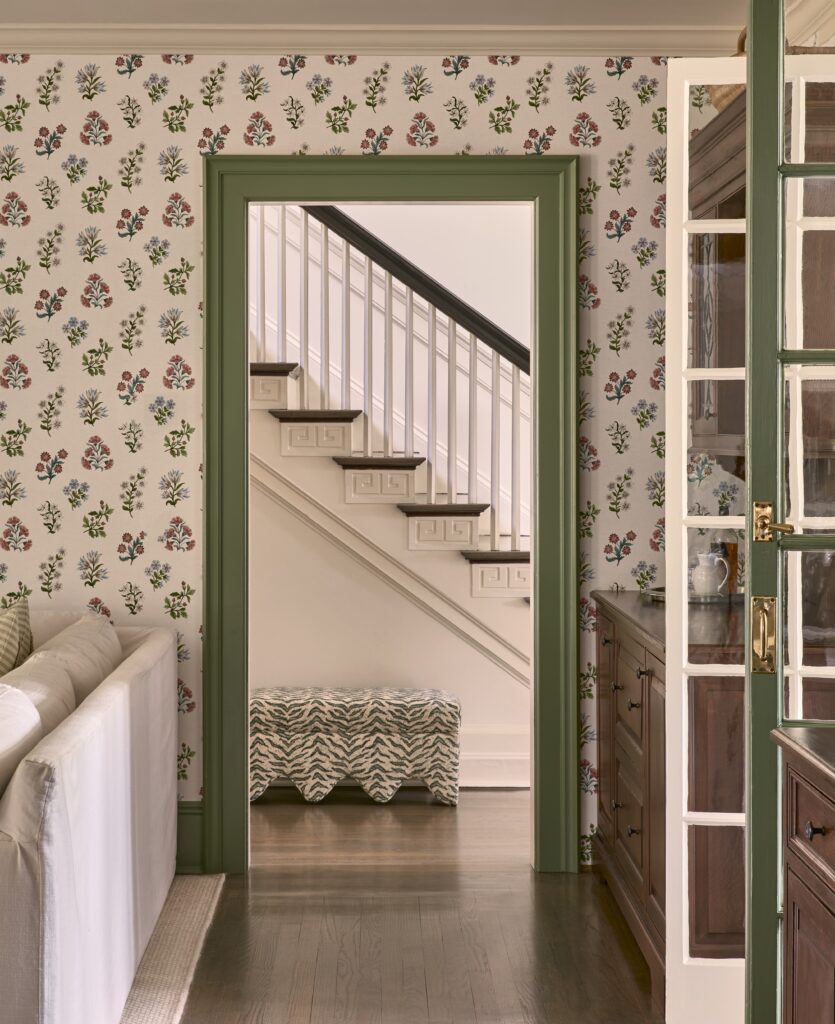
We started with a cheerful floral wallpaper and layered in patterned upholstery, tapes, borders and tassels. There is a lot going on in this room. Possibly more than we could ever explain on paper without making it sound completely insane.
But it works.
One of our favorite details is the colorful tassel trim on the window treatments. It had been floating around our office during the design process, and at some point we tossed it into the pile for this room.
Oh my God. Yes.
And that was pretty much the end of that discussion.
There are moments like that throughout the house—little trims, unexpected patterns, colors that shouldn’t necessarily work together but somehow do. They keep the traditional elements from becoming too serious.
We talk a lot about wanting rooms to feel collected over time, but the funny thing is that an old house actually has been collected over time.
Heritage House had a story long before our clients moved in, and hopefully it will have a very long one after them. Our job wasn’t to erase everything that happened before us or freeze the house at some moment in its history. It was simply to add another layer.
And maybe that’s the secret to decorating and designing an old house. You don’t have to make it perfect. You just have to make sure the next layer belongs.
More from Heritage House:

