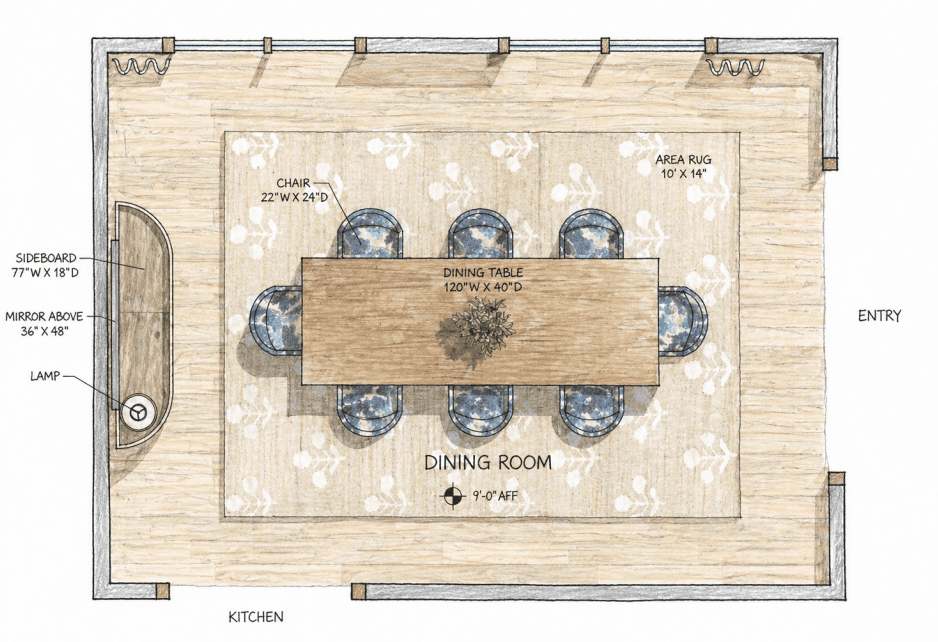
There’s something about a dining room that makes people assume it should be simple. Maybe even inexpensive. There’s no plumbing. No appliances. No complicated layout. Just a table, some chairs, and a light fixture overhead. How expensive could it be?
And yet, somehow, the dining room is one of the easiest spaces in a home to accidentally spend $40,000–$50,000 furnishing. As interior designers working throughout Northern New Jersey, we often hear the same question from clients:
“How did we get to that number?”
The answer is usually not one extravagant purchase. It’s a series of thoughtful, quality-driven decisions that add up quickly. To illustrate, we decided to design a fully furnished dining room and track the budget along the way.
Designing a Dining Room: Where Does the Budget Go?
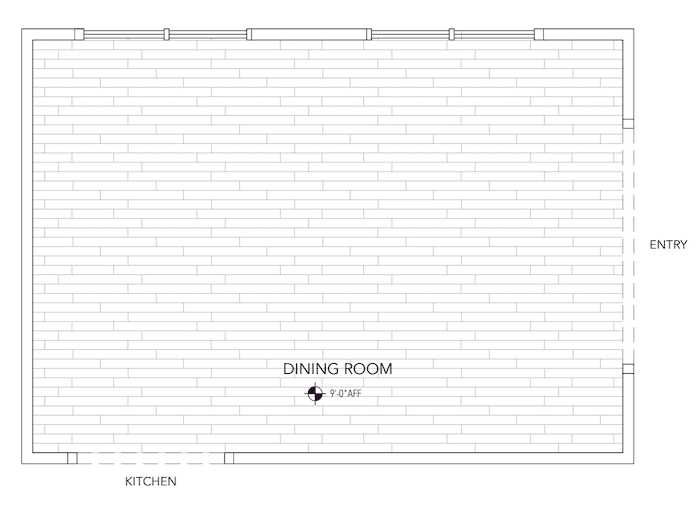
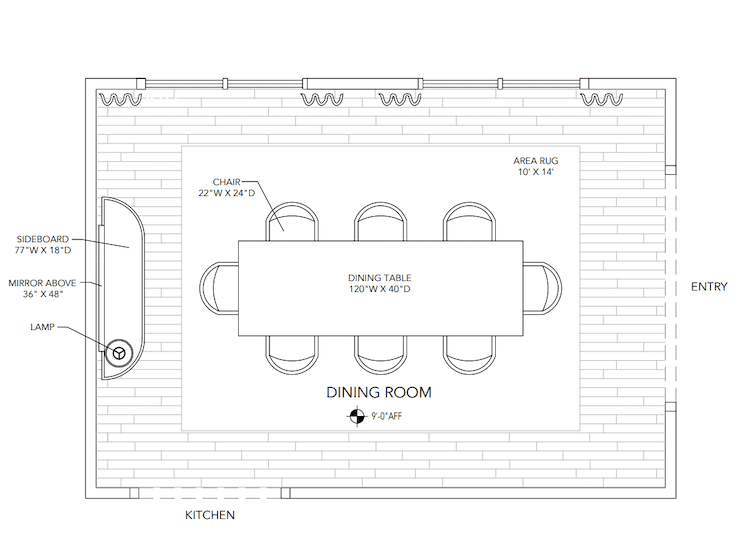
For this exercise, let’s start with a fairly standard dining room measuring approximately 14′ x 20′.
At first glance, it seems straightforward. But as you’ll see, creating a dining room that feels polished, timeless, and beautifully layered requires more than most homeowners expect.
The Dining Table: The Foundation of the Room
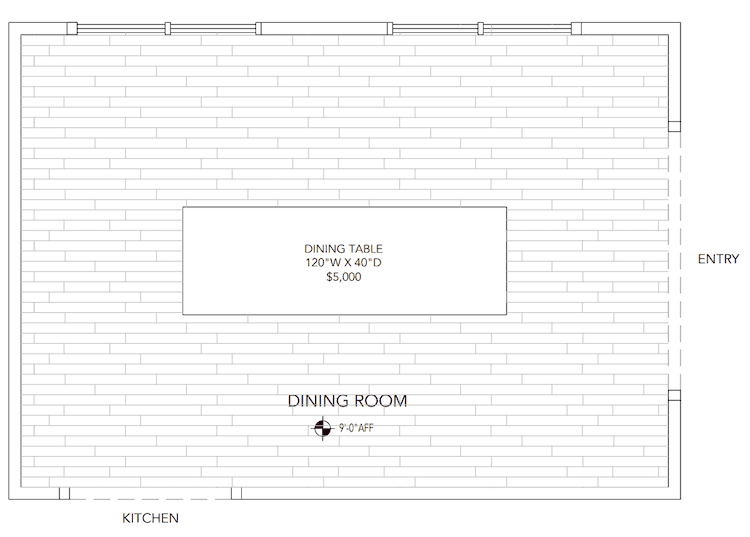
Every dining room begins with the table.
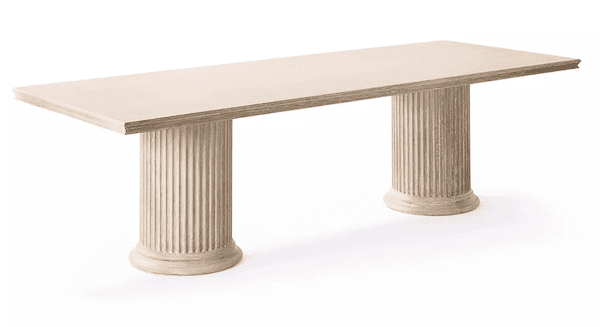
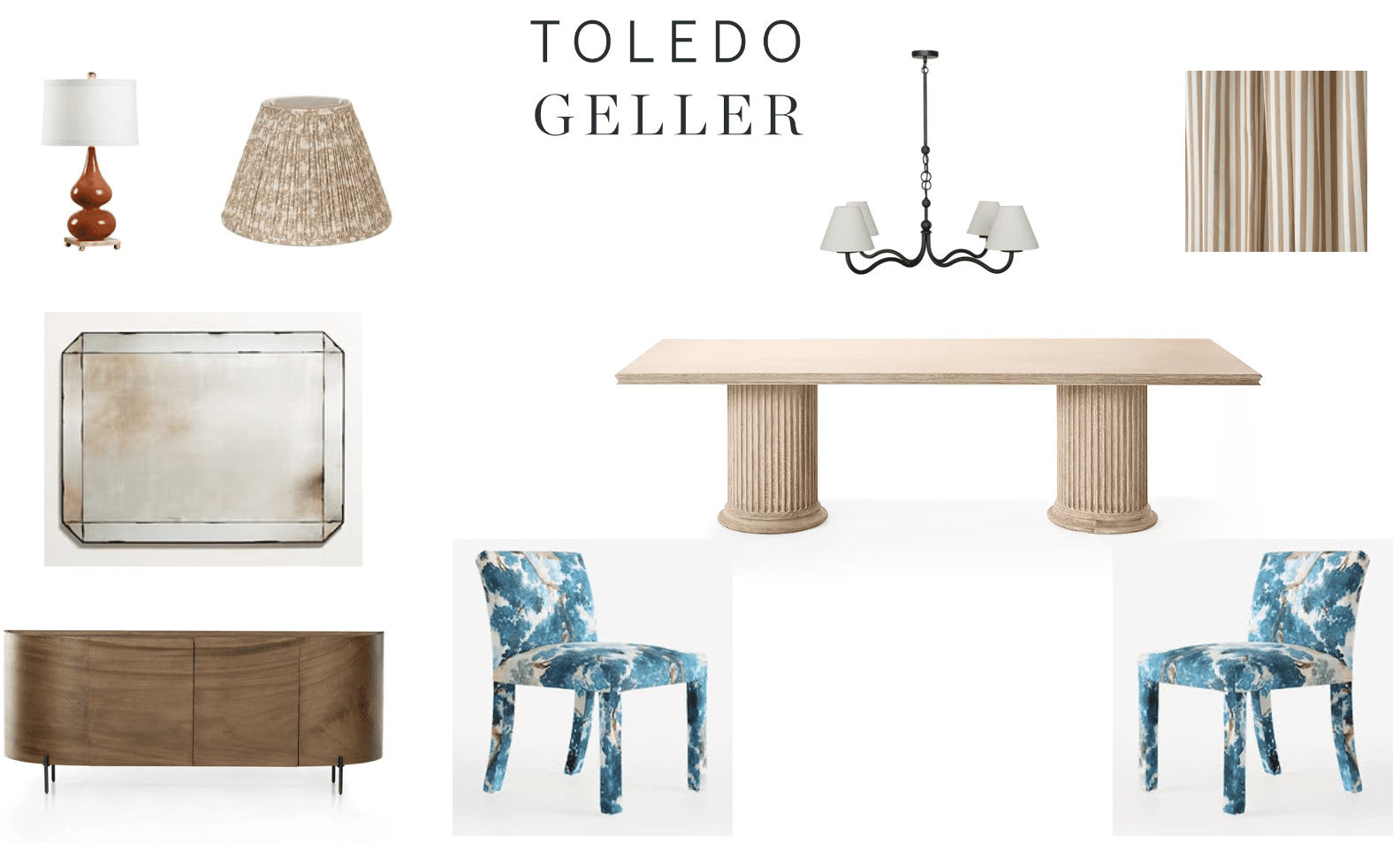
We wanted something substantial and classic—traditional in spirit, but without feeling overly formal or dated. The kind of piece that feels just as appropriate for a holiday gathering as it does for a casual Tuesday dinner.
When it comes to furniture investment, we often tell clients that if you touch it with your body—your hands, your back, your seat—it’s worth spending a little more. Quality is something you feel every day.
The table we selected came in at approximately $4,500 after a promotional discount.
Could we have spent less? Absolutely.
But the dining table is often the hardest-working piece in the room. Choosing a timeless silhouette and quality construction means it can stay with you for decades.
Dining Chairs: Where Costs Start to Multiply
This is where budgets get sneaky.
You don’t need one chair. You need eight. Or ten. Sometimes twelve.
For years, we advised clients to budget roughly $1,000 per dining chair. Today, many custom options exceed that number considerably.
For this room, however, we intentionally shopped retail.
Retail furniture can be an excellent way to control costs, but it comes with tradeoffs. Many options are designed to appeal to the broadest possible audience, which often means safe fabrics, neutral palettes, and predictable silhouettes.
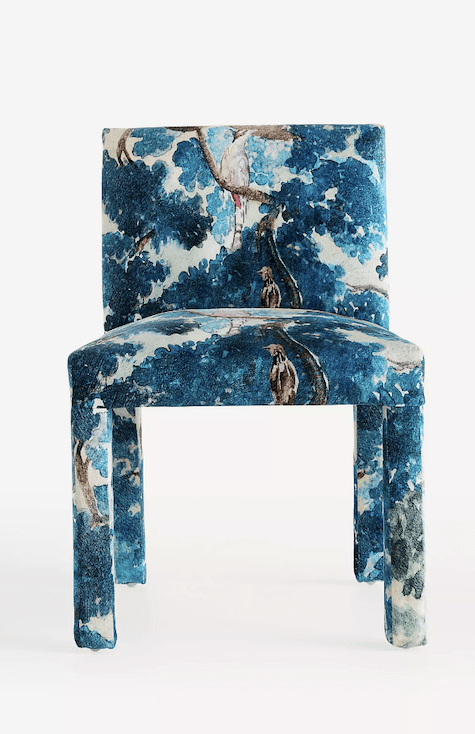
We wanted something with personality.
A dining chair can do a surprising amount of heavy lifting in a room. Pattern, color, and texture help a space feel collected and curated rather than looking like everything arrived from the same showroom floor.
Our final selection delivered exactly that: vibrant upholstery, strong visual interest, and comfort—all for under $500 per chair.
For ten chairs, the total investment came to just under $5,000.
Combined with the dining table, we were already approaching $10,000 before tax, shipping, or delivery.
And we’re just getting started.
Choosing a Dining Room Chandelier
A dining room chandelier has a difficult job.
It needs to be appropriately scaled for the room, centered over the table, visually interesting, and distinctive enough that it doesn’t look like every other fixture in the neighborhood.
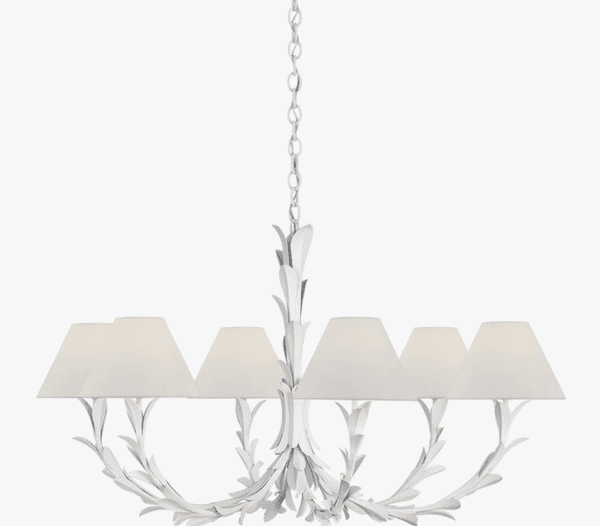
For this space, we gravitated toward a sculptural plaster-white chandelier.
Plaster finishes have become increasingly popular in recent years because they add texture and character without overwhelming a room. Unlike highly reflective metals, they feel soft and architectural.
Our preferred fixture landed around $4,000.
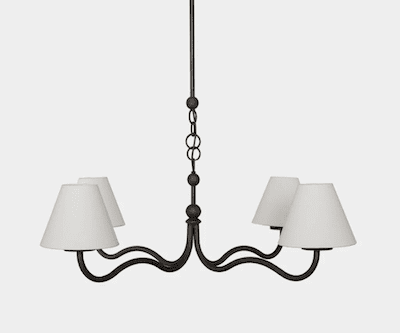
Lighting is one of those elements that can completely transform how a room feels, making it an area where thoughtful investment often pays dividends, however if this is feeling like too much, here’s another great option that’s a little (a lot) more simple, at $1600 to boot.
The Area Rug: An Often-Overlooked Investment
One of the most common dining room mistakes we see is choosing a rug that’s too small.
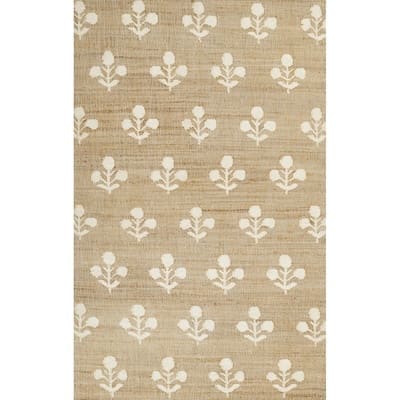
In a room this size, we would specify a 10′ x 14′ rug to ensure chairs remain comfortably on the rug when pulled away from the table.
The rug we selected offered subtle pattern and texture while allowing the furniture to remain the focal point.
Cost: approximately $2,900.
Suddenly, our “simple” dining room is beginning to look a little less simple.
Every Dining Room Needs a Sideboard
A dining room without storage is rarely as functional as it could be.
A beautiful sideboard or server provides storage for entertaining essentials while introducing another layer of visual interest.
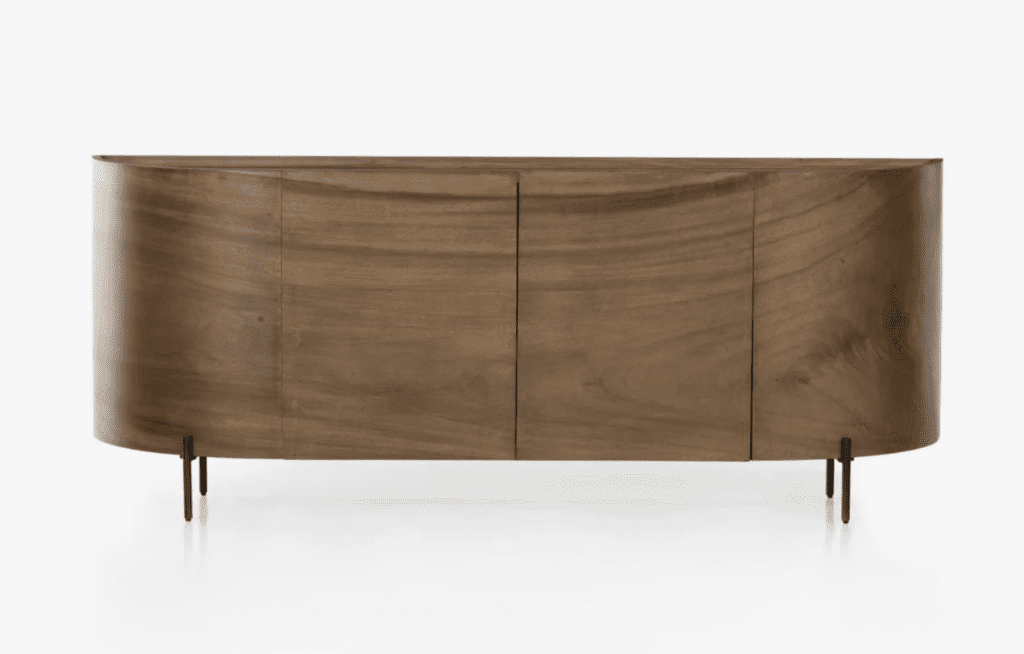
For this room, we selected a curved sideboard with clean, modern lines.
The mix of traditional and contemporary elements is what keeps a space from feeling tied to a particular trend or decade.
Investment: approximately $4,400.
The Finishing Layers Matter More Than Most People Realize
At this point, many homeowners assume the room is complete.
But these finishing details are often what separate a professionally designed space from one that feels unfinished.
Lighting Accessories
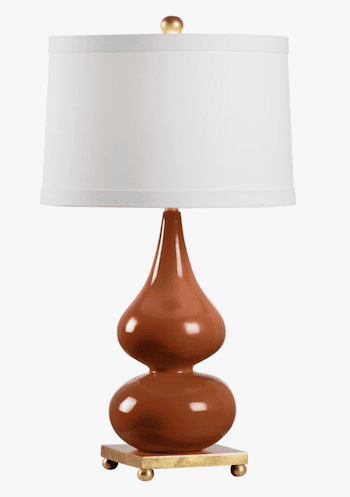
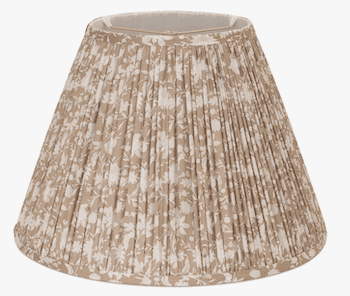
A pair of table lamps with upgraded shades helps soften the room and create warmth during evening entertaining.
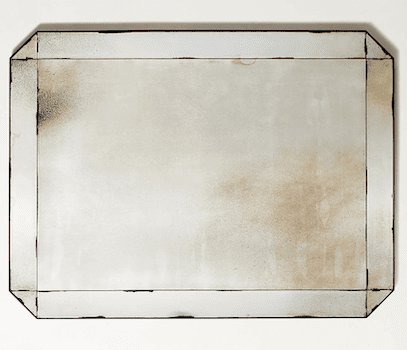
Decorative Mirror
An antiqued mirror introduces character, reflects light, and visually expands the space.
Window Treatments
And then there’s the category that surprises almost everyone: drapery.
Custom and semi-custom window treatments are frequently among the largest line items in a project.
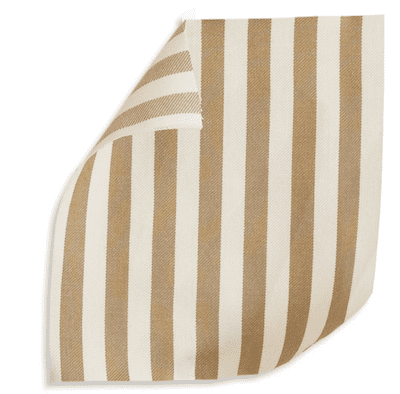
For this dining room, we selected tailored striped panels with proper fullness and generous proportions.
One detail we never compromise on? Width.
Undersized drapery can instantly make a room feel less luxurious. Properly scaled panels create presence and softness while framing the architecture beautifully.
For two pairs of semi-custom panels, the investment was approximately $5,000 before hardware and installation.
Why Furnishing a Dining Room Costs More Than You Think
By this point, our dining room had reached approximately $30,000—and we still hadn’t addressed:
- Artwork
- Wallpaper
- Paint
- Additional accent seating
- Styling accessories
- Delivery and installation
- Sales tax
- Freight and shipping
Once those costs are factored in, reaching the $40,000–$50,000 range becomes surprisingly realistic.
And that’s not because of extravagance.
It’s because quality furnishings, thoughtful lighting, proper-scale rugs, custom window treatments, and timeless design all require investment.
Can You Furnish a Dining Room for Less?
Absolutely.
There are always opportunities to prioritize, phase purchases, or make strategic substitutions.
But as interior designers, our responsibility isn’t simply to recommend the lowest-cost option. It’s to specify pieces we believe in—pieces that will perform well, age gracefully, and continue to look beautiful years from now.
The fastest way to waste money is to buy something you’ll need to replace in three years.
So no, you don’t have to spend $40,000 on a dining room.
But if you’ve ever reviewed a furnishing proposal and wondered how the numbers added up, hopefully this provides some clarity.
It’s rarely one big splurge.
It’s a collection of thoughtful, reasonable decisions that create a room that feels complete.
And when it’s done right, it doesn’t feel like “just a dining room.”
It feels like one of the most inviting spaces in the home., thoughtful lighting, proper-scale rugs, custom window treatments, and timeless design all require investment.