

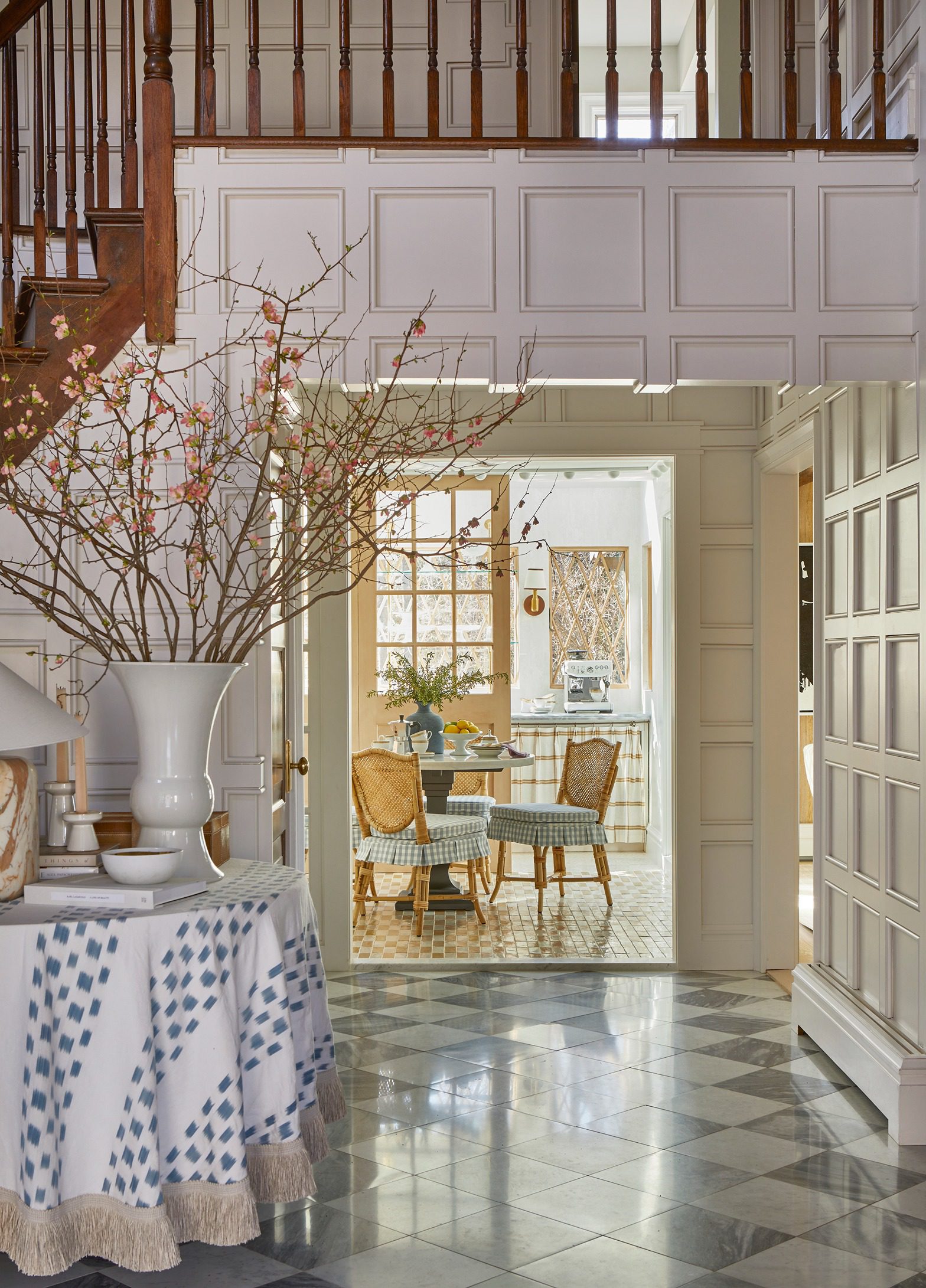


This was not the house we were supposed to buy.
At the time, we were deep into architectural drawings and renovation estimates for a lakefront Mediterranean-style home that required extensive work but felt entirely aligned with my vision. As interior designers often do, I had already begun mentally transforming the space, envisioning its potential long before it was ever ours.
And then, unexpectedly, the sellers decided not to move forward.
What followed was a rapid shift from emotion to practicality. With a timeline tied to our daughter starting school in a new town, we had to act quickly in a competitive Northern New Jersey real estate market. Inventory was limited, decisions had to be strategic, and every home was evaluated through a clear design lens: what could work, what couldn’t, and where potential existed.
That’s when we found what we now call The Hideaway.
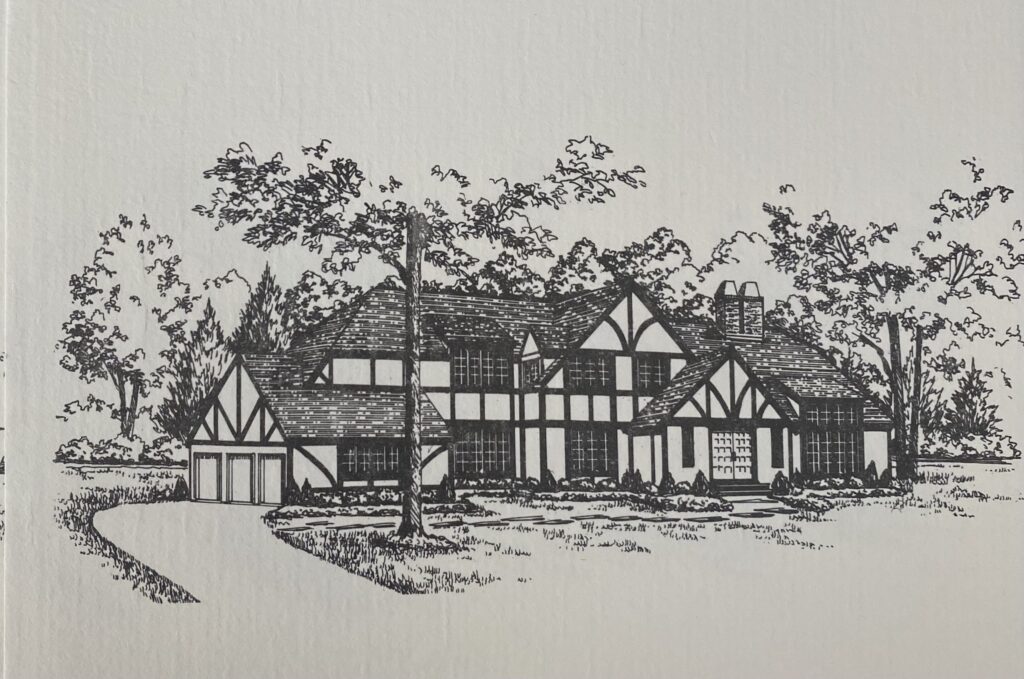
A Hidden Gem in Northern New Jersey
Tucked behind a dense layer of mature trees, the home was nearly invisible from the street. Its muted taupe exterior and dark half-timbered detailing allowed it to blend quietly into its surroundings. But as you moved up the driveway, the house gradually revealed itself – and that sense of discovery was immediately compelling.
Inside, the foyer was the first moment that sparked possibility.
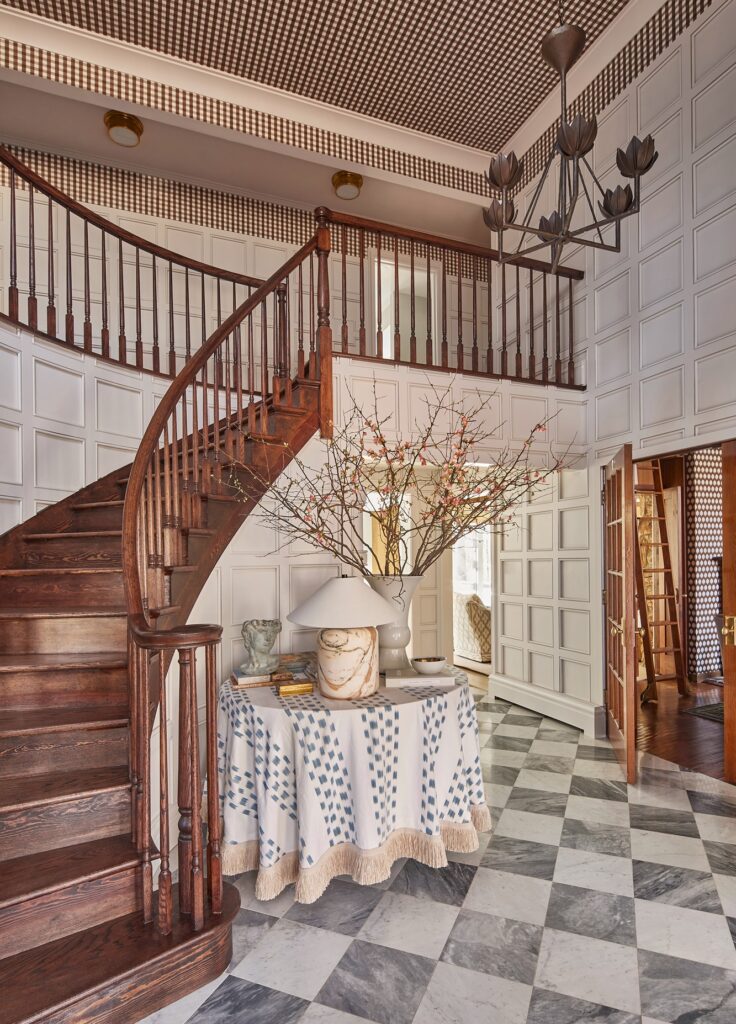
The entry sequence unfolded intentionally: a vestibule leading into a two-story foyer, creating a layered and welcoming arrival experience. A curved staircase added a sense of architectural grace—an uncommon find among many early 2000s homes. A library sat just beyond a set of double doors, while the dining room, though well-sized, lacked the level of intimacy and drama I typically aim to achieve in residential design.
It was clear from the start that the foyer would need to carry the visual and emotional impact of the home.
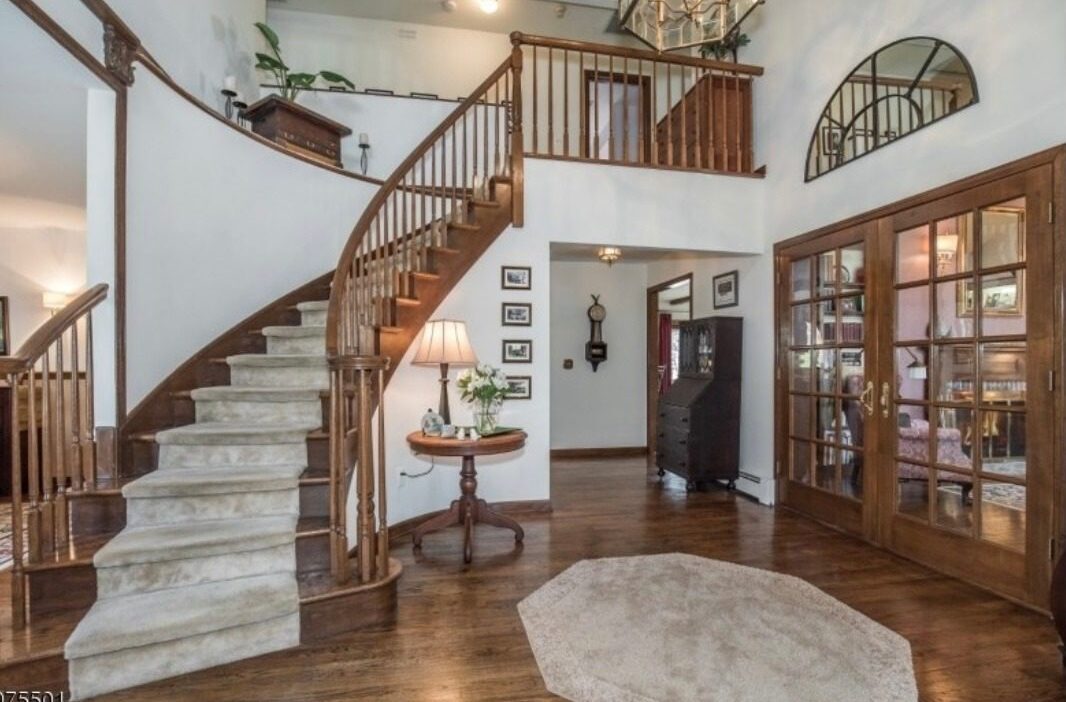
One of the most common challenges in Tudor-style homes, especially in Northern New Jersey—is limited natural light. This home was no exception.
The foyer’s north-facing orientation, combined with dense exterior landscaping, created a noticeably dim entry. Meanwhile, the majority of natural light entered from the rear, south-facing side of the home—but a dividing wall between the kitchen and foyer prevented that light from flowing forward.
Removing that wall became a priority in our interior design plan.
Because while moody interiors can be beautiful, access to natural light is essential for creating warmth, balance, and livability.
Establishing a Bold Design Foundation
The transformation began with the flooring.
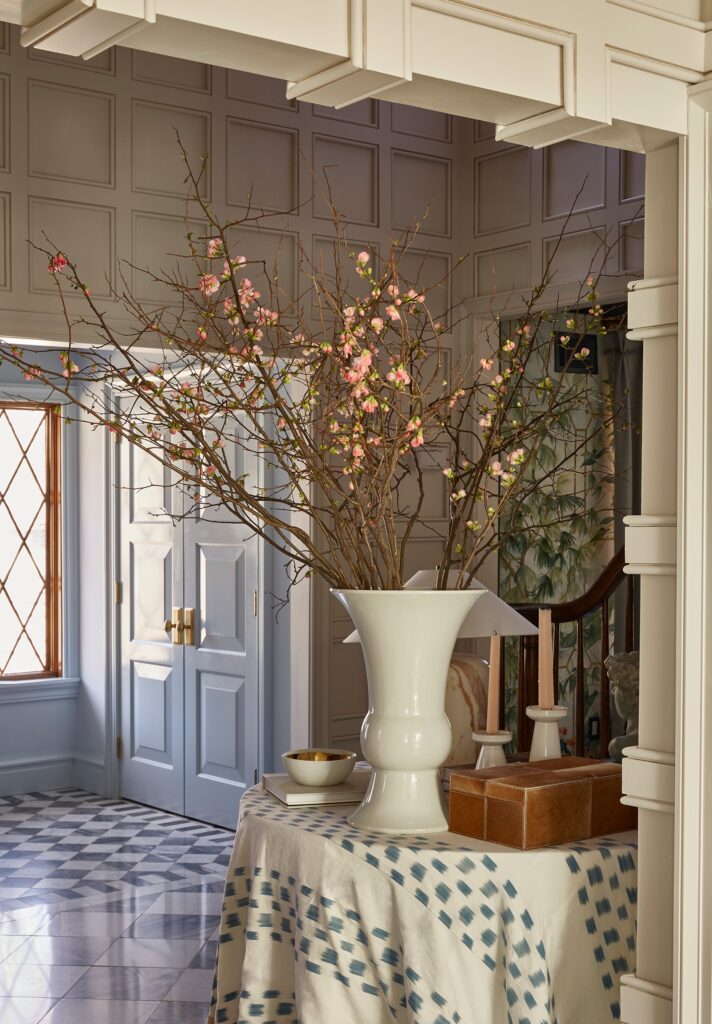
We replaced a mix of outdated ceramic tile and dark hardwood with a blue-gray and white checkerboard marble floor. This decision immediately elevated the foyer and established a more intentional, high-impact design direction that balanced classic materials with a fresh, modern perspective.
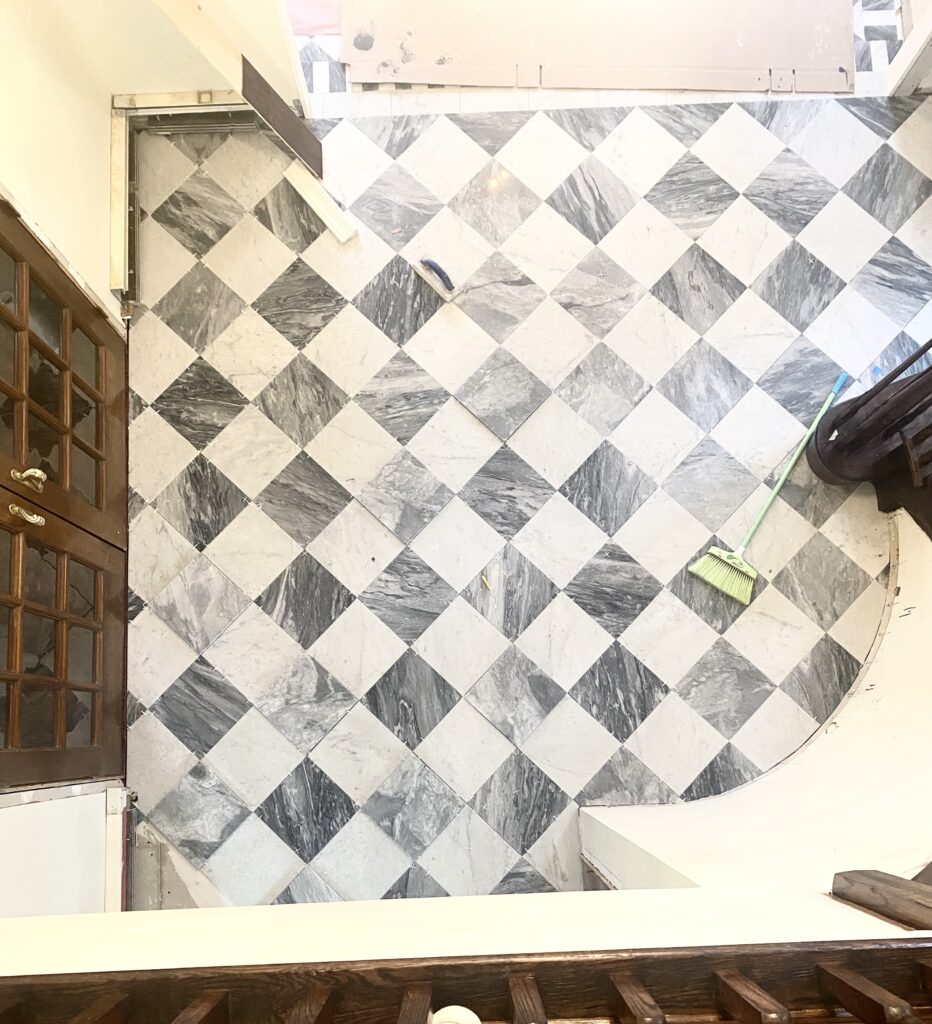
Refining, Not Replacing: A Smart Staircase Solution
While a full staircase redesign would have been ideal, budget considerations called for a more strategic approach—a reality many homeowners and designers face during renovations.
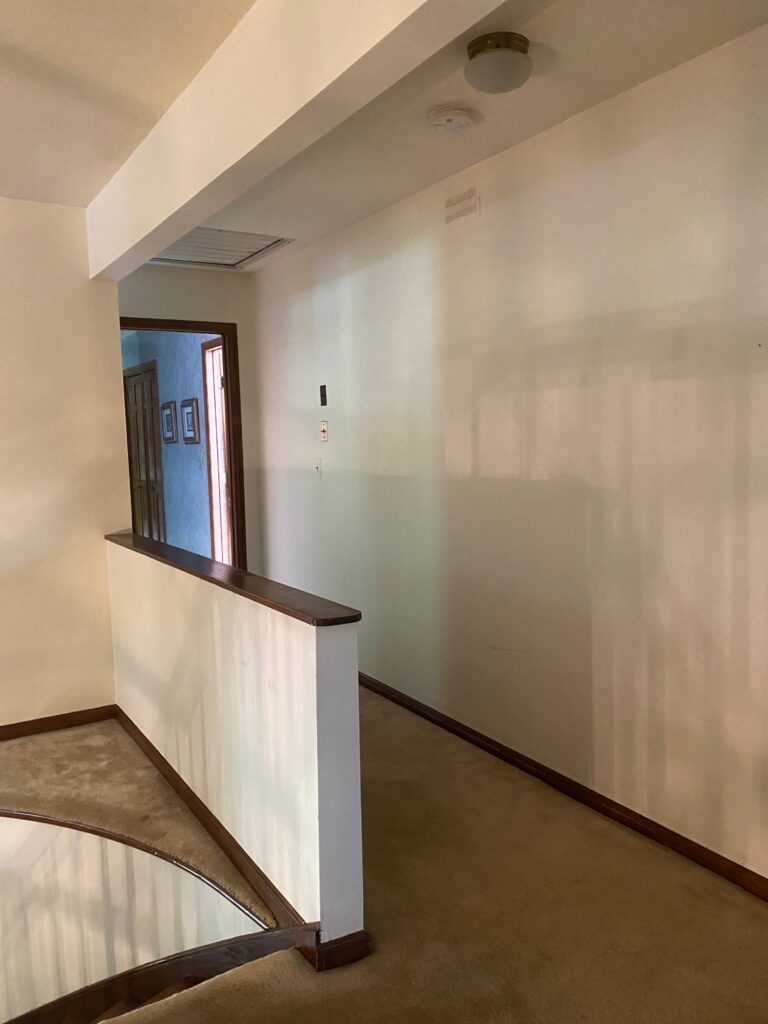
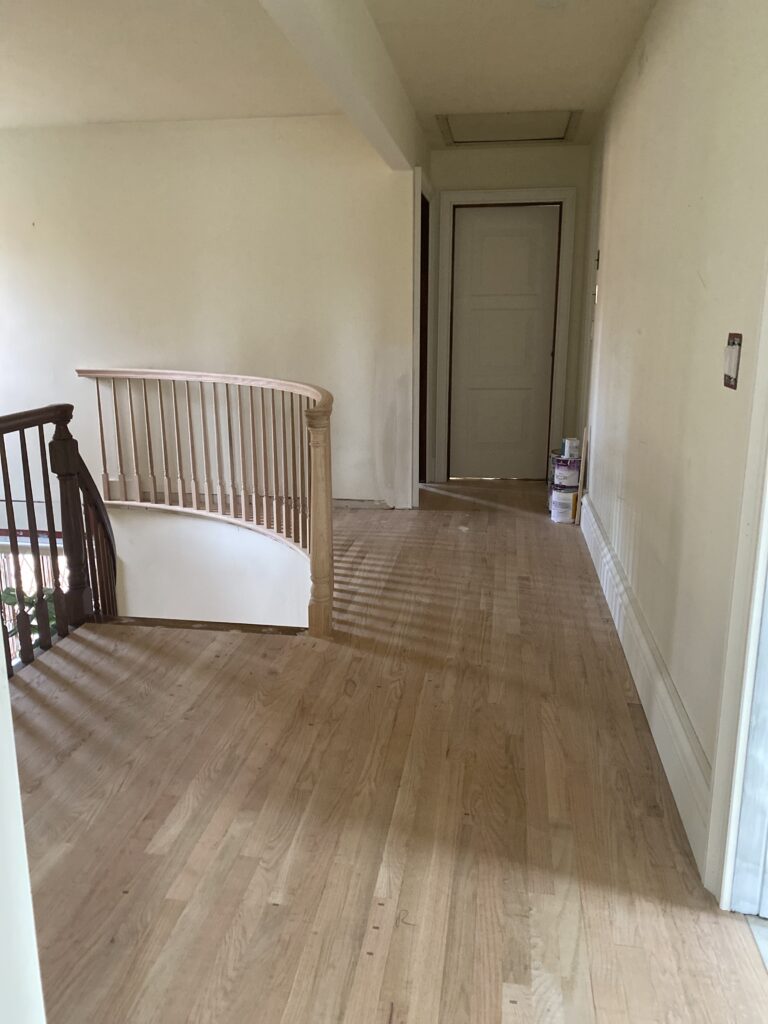
The existing curved staircase had strong bones, but the upper landing presented a challenge. A half wall disrupted the flow, creating an awkward, carpeted landing and visually narrowing the second floor hallway.
In a rare and fortunate turn, we discovered that the original stair fabricator was still in business. They were able to template the existing curve and install a custom railing that seamlessly matched the original design. The result was a cohesive, elevated architectural feature that felt intentional and complete.
Letting the Light In
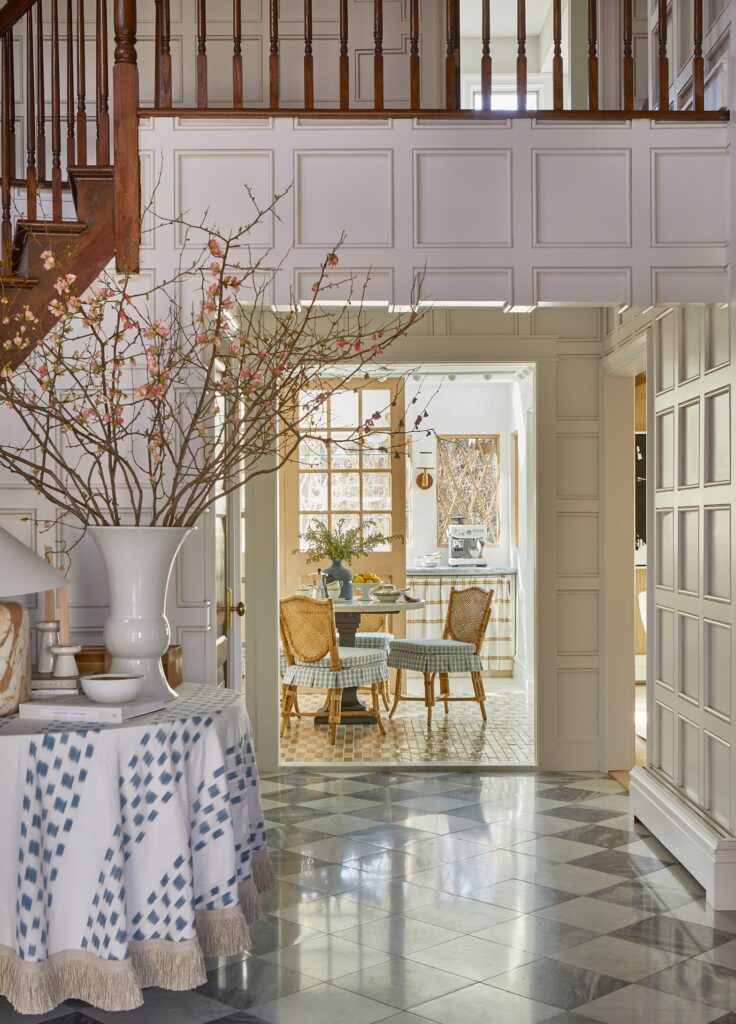
Once the dividing wall between the foyer and kitchen was removed, the transformation was immediate.
Natural light from the rear of the home flooded the entryway, completely changing the atmosphere. The space shifted from enclosed and dim to open, airy, and welcoming—demonstrating the power of thoughtful spatial planning in residential interior design.
Adding Architectural Character with Custom Millwork
While the home’s exterior reflected classic Tudor charm, the interior lacked the architectural detailing needed to support that style.
To address this, we designed and installed custom wall paneling throughout the foyer. This millwork added depth, structure, and a sense of permanence bringing the interior closer in spirit to a traditional manor-style home while maintaining a fresh, livable aesthetic.
The Unexpected Finishing Touch
Even after introducing new flooring, improving the staircase, opening the layout, and adding millwork, something still felt incomplete.
The space needed warmth.
To soften the formality and introduce a sense of familiarity, we turned to pattern – specifically, a medium-scale chocolate gingham applied to the ceiling. Paired with an oversized cove crown molding, this unexpected detail brought balance to the room, blending sophistication with comfort.
Suddenly, the foyer no longer felt purely dramatic – it felt inviting.
A Foyer Designed to Welcome
As an interior designer based in Northern New Jersey, I believe a home should tell a story from the moment you walk through the door.
For The Hideaway, that story begins before you even step inside—hidden behind trees, slowly revealing itself, and then opening into a space that feels layered, intentional, and warm.
The foyer sets the tone. It signals that what lies beyond is thoughtful, personal, and designed to be experienced.
Because great design isn’t just about how a space looks.
It’s about how it welcomes you in.

