

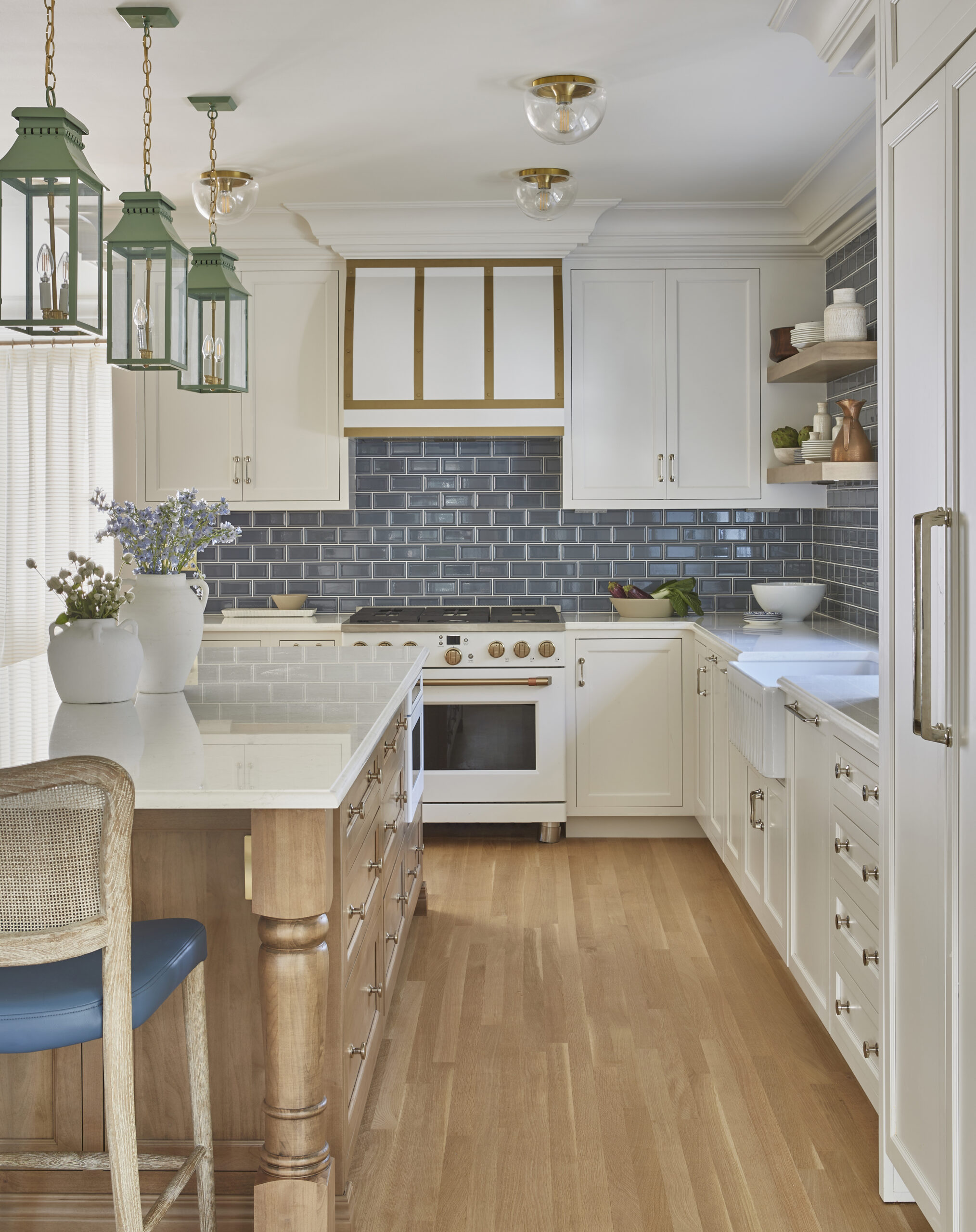

I’m in the early stages of a personal project in West Palm Beach right now, working with a contractor I’ve never collaborated with before. We were going through the initial details — scope, sequencing, the usual — and at one point he said, very casually:
“I’ll send you my preferred brands for recessed lights.”
I audibly gasped.
Like… out loud.
And without thinking I said, “Oh – there will be no recessed lights.”
This wasn’t me being dramatic (okay, maybe a little). It was instinctual. Because once you’ve really thought about lighting – once you’ve lived with good lighting and bad lighting – you can’t unsee those tiny circles punctuating an otherwise lovely ceiling plane.
Why Designers Are Moving Away From Recessed Lighting
Among the designers we admire most, and certainly within our own work, recessed lights are something we actively shy away from, especially in homes with standard or lower ceiling heights.
Here’s why:
- They visually flatten a space
- They create harsh overhead “big light” energy
- They interrupt otherwise beautiful ceiling planes
- They trick homeowners into thinking their lighting plan is complete
It isn’t.
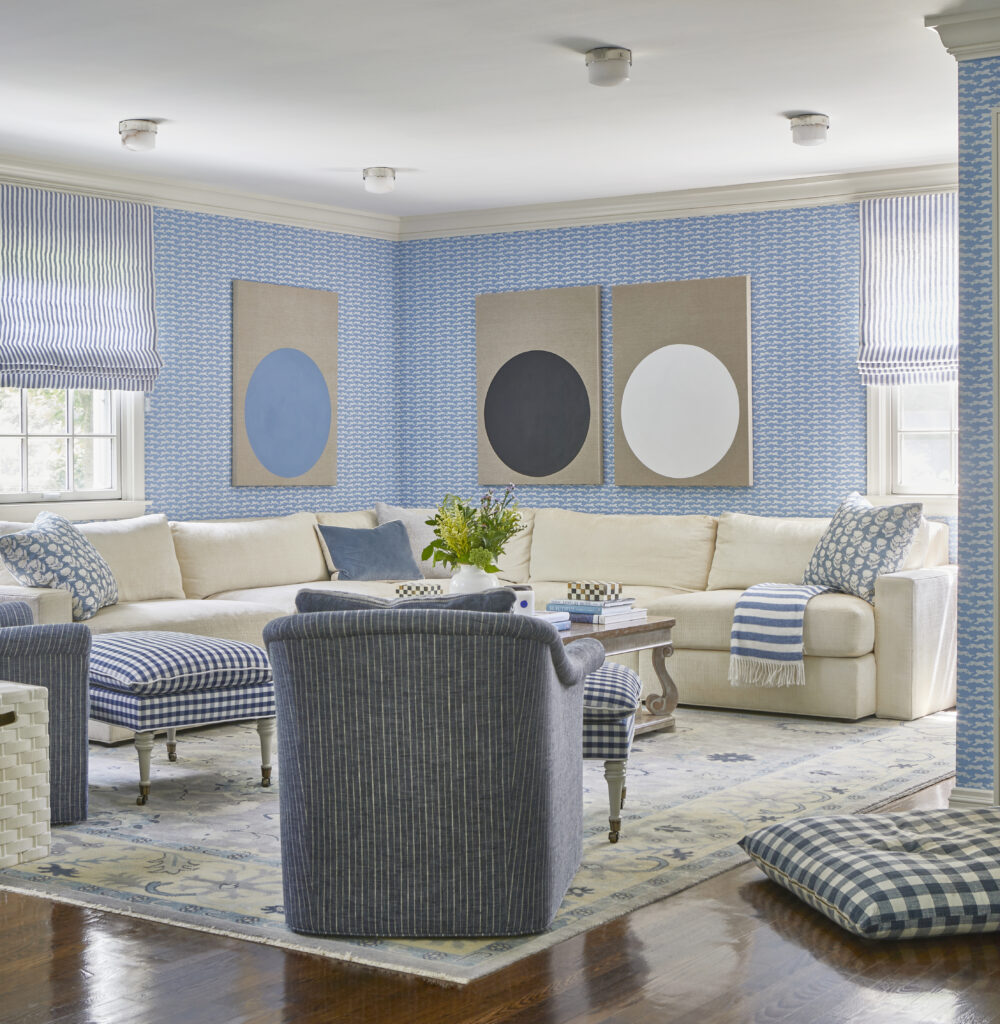
This living room originally had a full grid of recessed lights. We replaced (and shifted) them to create far more interest across the 8-foot ceiling — proof that small changes overhead can completely transform a room.
Our Go-To Alternative: Flush Mount Lighting (“Flushies”)
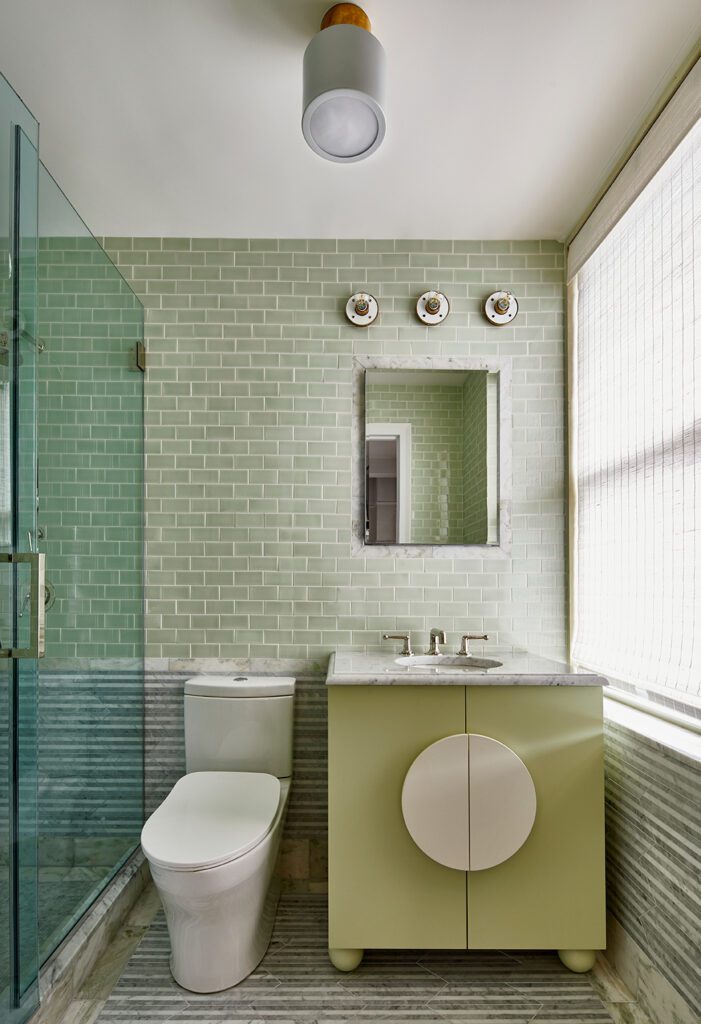
Instead, we rely heavily on flush mount fixtures – what we affectionately call flushies in our studio.
Our sweet spot:
- Approximately 5 inches in diameter
- No taller than about 8 inches
- Clean, architectural profiles
- Soft ambient output
They do the quiet, unglamorous work recessed lights are supposed to do… but better.
Flush mounts give you ambient light without punching holes all over your ceiling. They feel intentional. Architectural. Finished.
When used correctly, they add a layer of refinement – almost like jewelry for the ceiling.
The Real Secret: Flush Mounts Are Never Working Alone
Here’s where many lighting plans go wrong.
Flush mounts should never be the only light source in a room. They work best layered with:
- Pendants
- Chandeliers
- Wall sconces
- Table and floor lamps
This layered approach creates warmth, depth, and that elusive glow every great room has.
Where We Love Using Flush Mounts Most
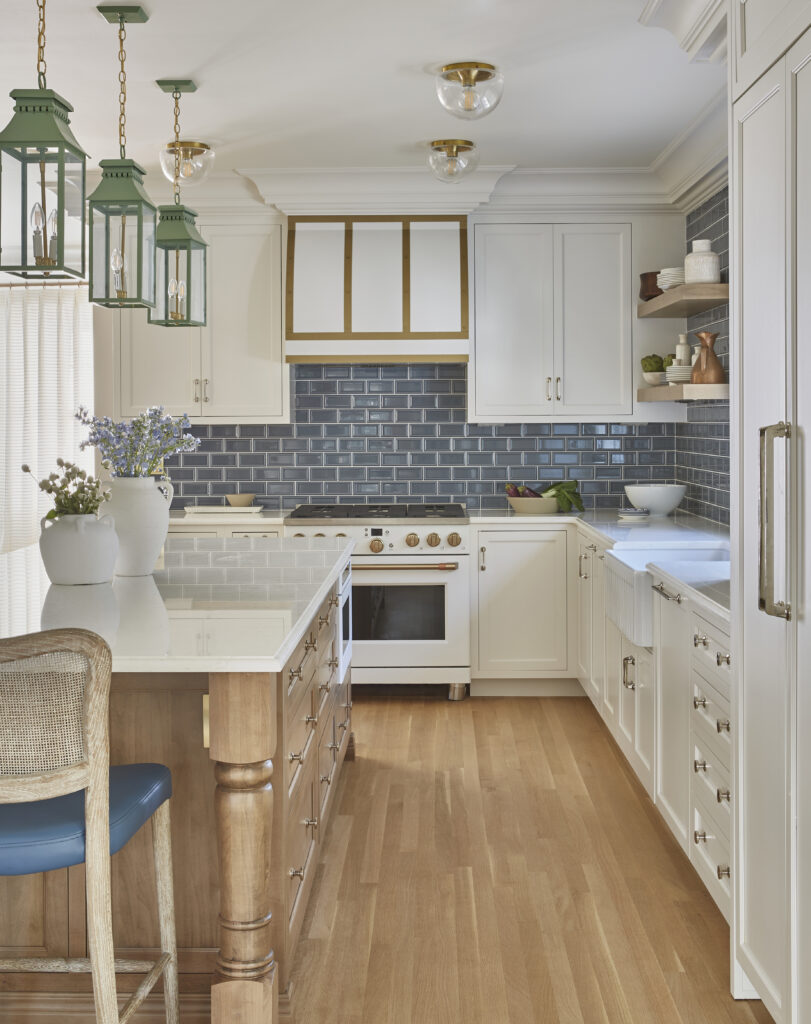
Kitchens
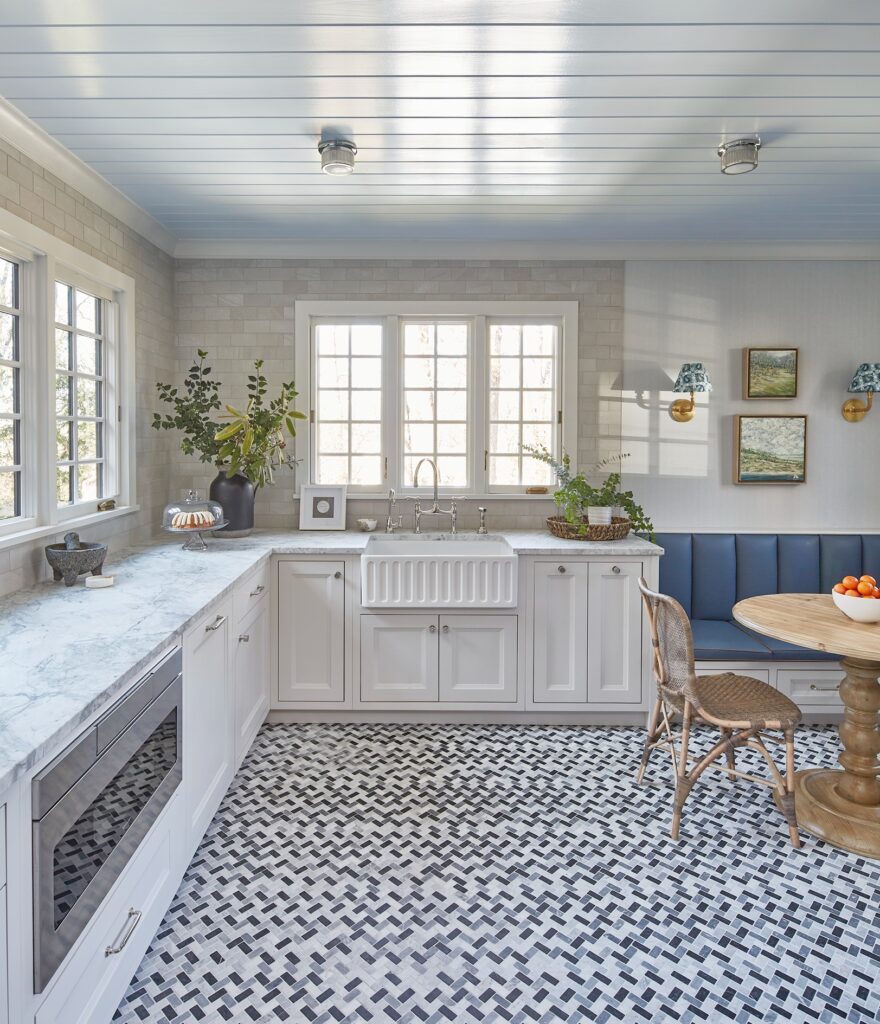
In kitchens, we love using flushies to handle circulation and flow. They look especially sharp:
- Around the perimeter of an island
- In galley kitchens
- Along main walkways
They keep the heart of the home from feeling like a big-box kitchen showroom and instead create a more tailored, residential feel.
This is where lighting stops being about coverage and starts being about atmosphere.
We’ll say it plainly: recessed lights almost always feel out of place in older homes.
When that center hall Colonial or Tudor was built in the early 1900s, there was no grid of recessed cans overhead — and your ceilings know it.
Older architecture benefits enormously from using flush mount lighting in lieu of recessed lights. The result feels:
- More period-appropriate
- More thoughtful
- More architecturally aligned
Now for the Fun Part
Links so you can create this look at home!

